
Before you start
Open and unlock the vault you want to synchronize. On the other device, install the Android app, open the web app or install the Chromium Extension. Both devices need to be online. Keep both apps open until linking finishes.
To link devices and synchronize your vault, you need either a paid Online Services subscription or your own connection servers. To use your own servers without a subscription, follow the self-hosting guide and add them under Vault signaling, the gear beside Linked Devices, before linking.
Create an invitation
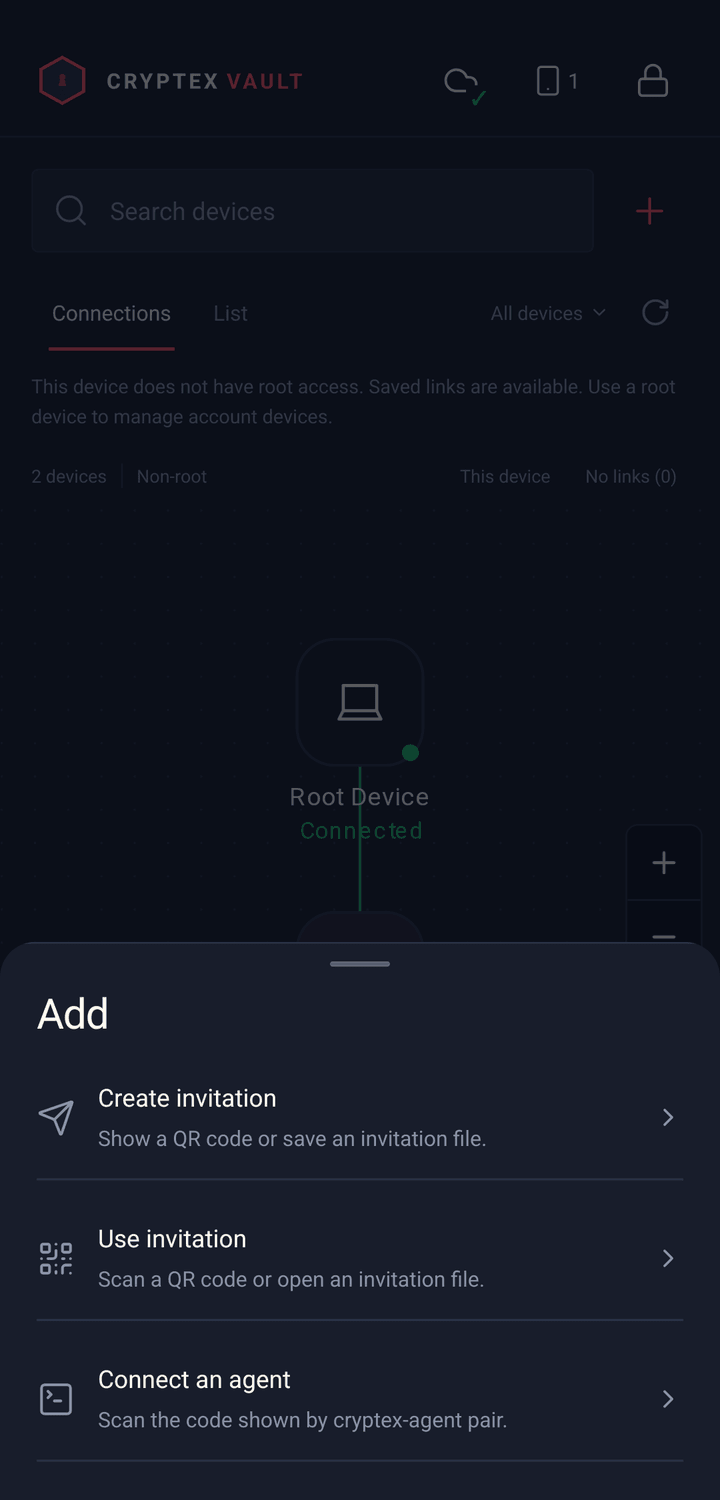
Create the invitation on the device where you created your Online Services account. Linked devices start without root access and can't create Online Services invitations until you choose Allow root access in their device details on a root device.
- 01
Open the Devices tab and tap +, then Create invitation.
- 02
Enter a name for the receiving device and tap Create invitation.
- 03
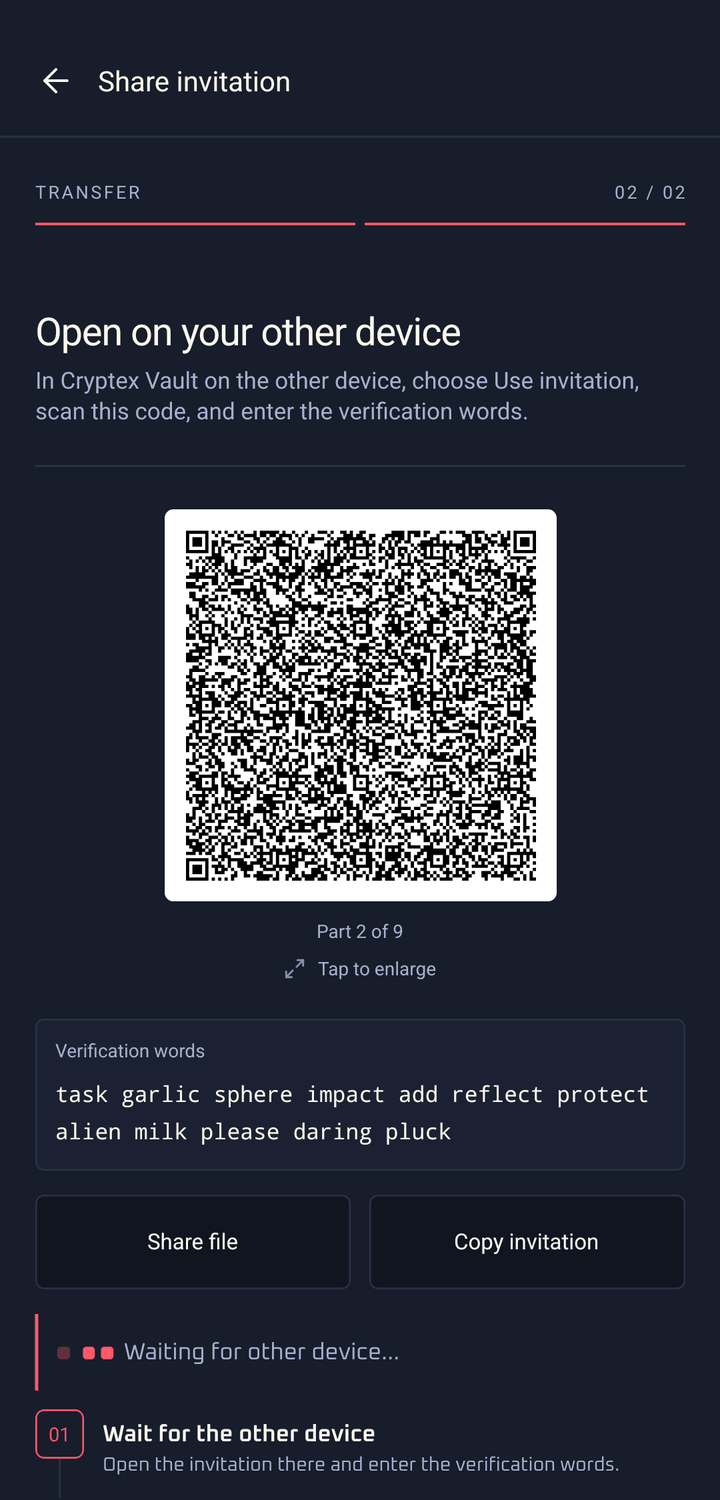
Let the other device scan the QR code, or tap Share file to send it an invitation file. Keep this screen open. It shows the verification words the other device asks for.
 View full size
 View full size
Accept the invitation on the other device
On a new install
- 01
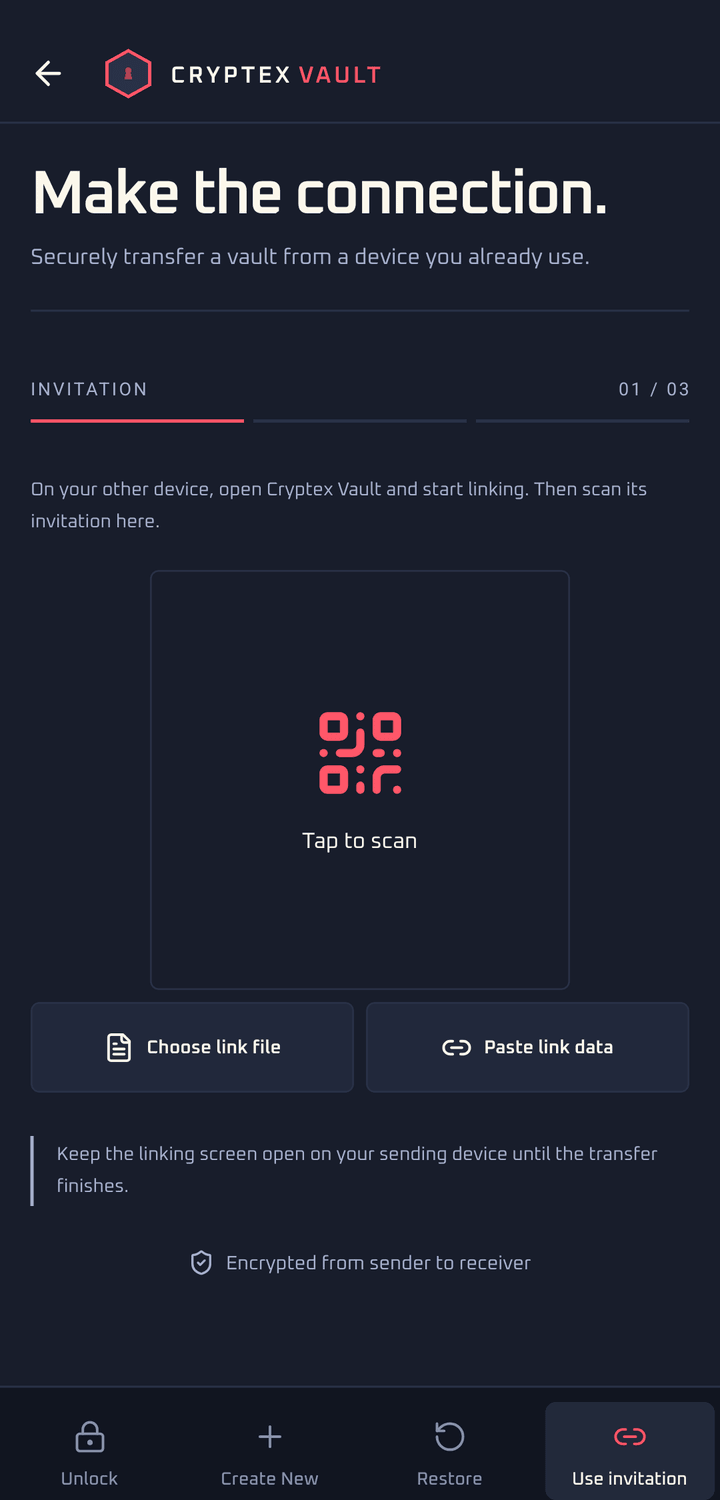
Install and open the Android app. On the first screen, tap Use invitation at the bottom instead of creating a vault.
- 02
Tap Tap to scan to scan the QR code, or Choose link file to open the invitation file.
- 03
Enter the verification words shown on the sending device and tap Connect to sending device.
- 04
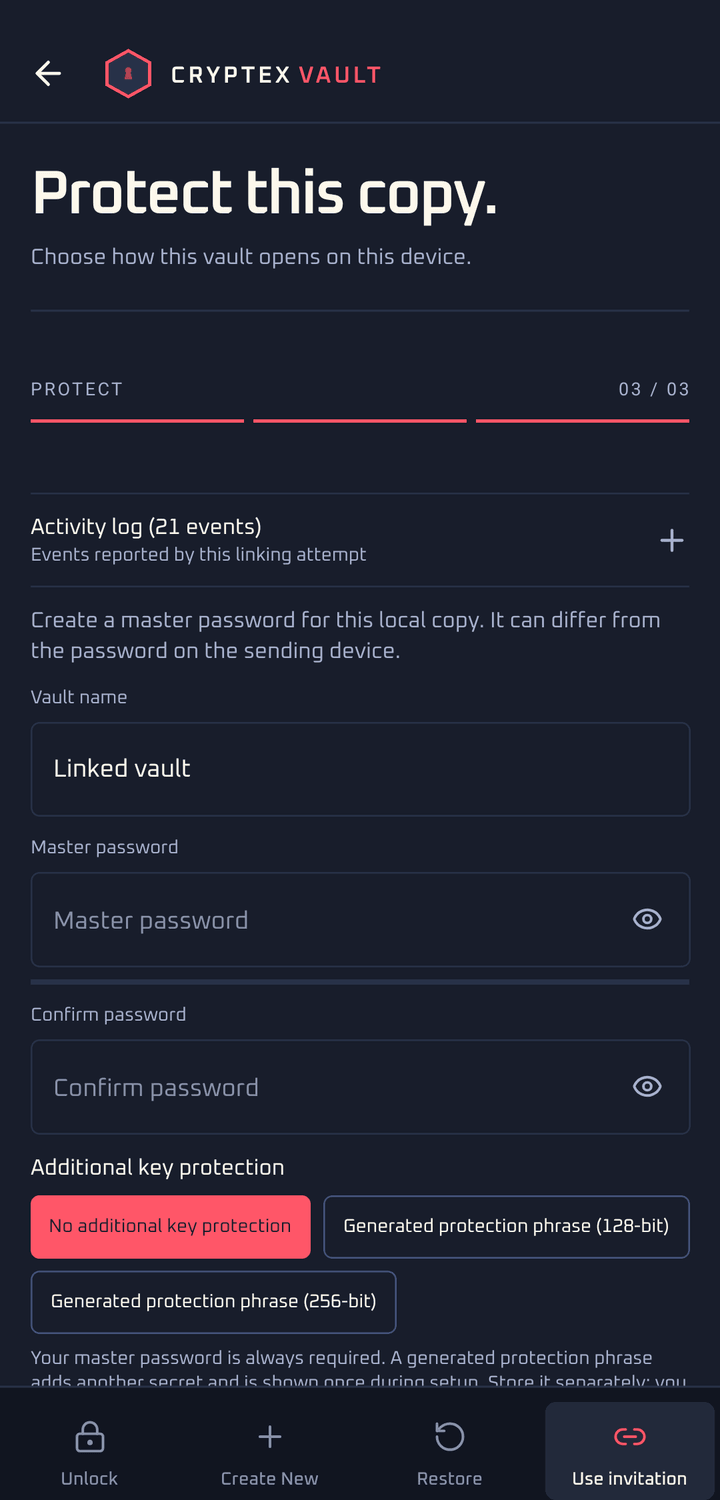
Name the vault, choose a master password for this phone and tap Continue. Write down the recovery code, then tap Save and open vault.
 View full size
 View full size
Into a vault you already use
- 01
Unlock the vault, open the Devices tab and tap +, then Use invitation.
- 02
Scan the QR code, or tap Open file or Paste to load the invitation.
- 03
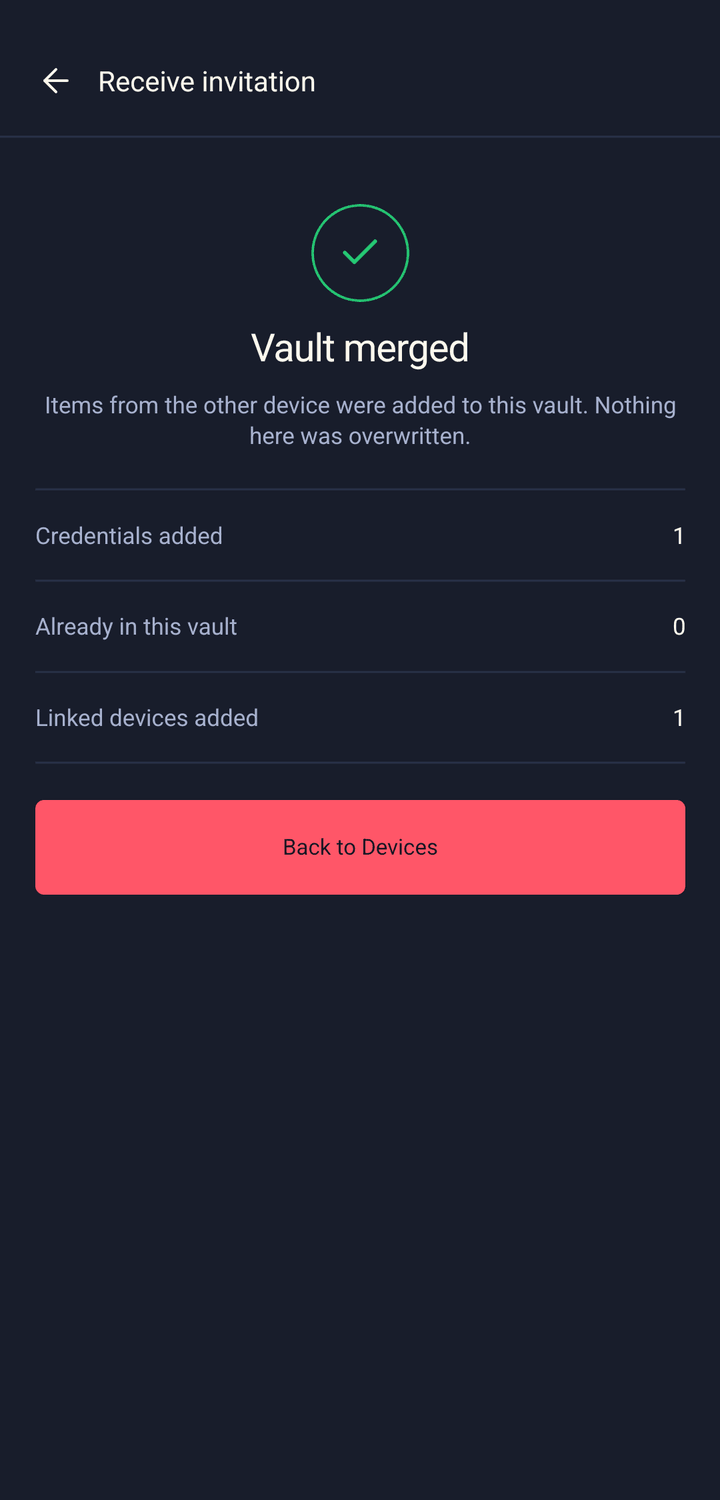
Enter the verification words and tap Connect & merge. The phone adds the other device's items and overwrites nothing in this vault.
 View full size
Share invitations and verification words only with the device you intend to link. Delete any copied invitation file once you finish.
If both devices have an account
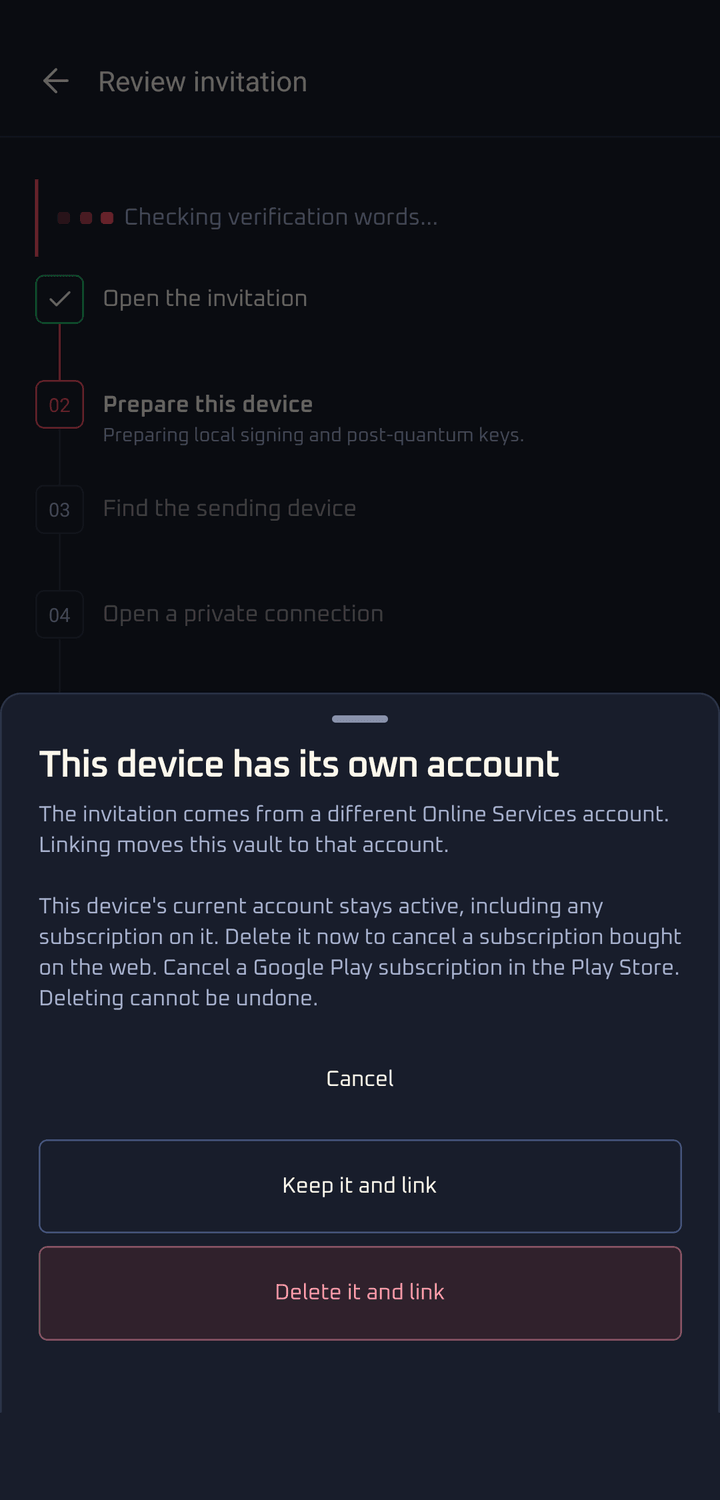
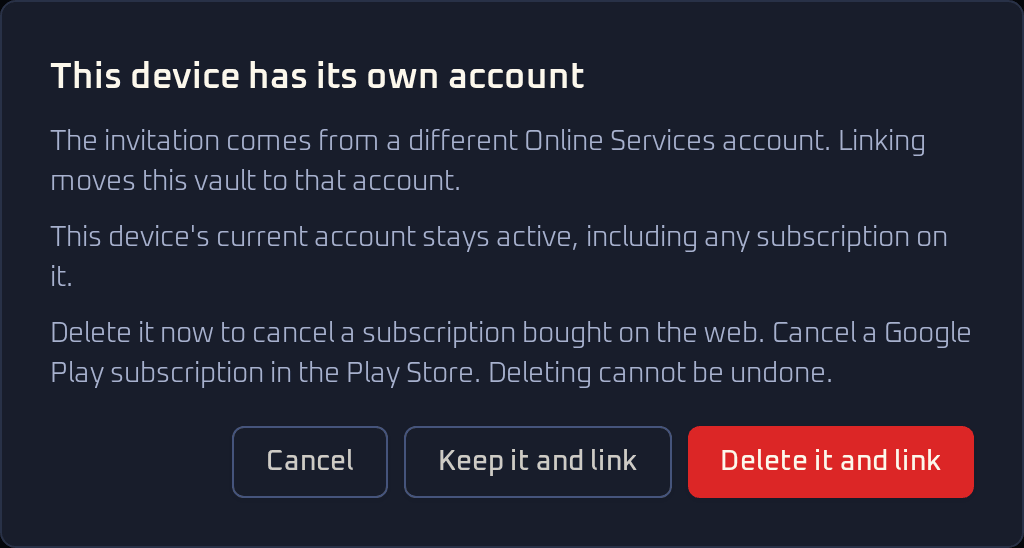
Linking moves the receiving vault to the sending device's Online Services account. If the receiving vault already has an account of its own, the web app and the Android app ask what to do with it before linking.
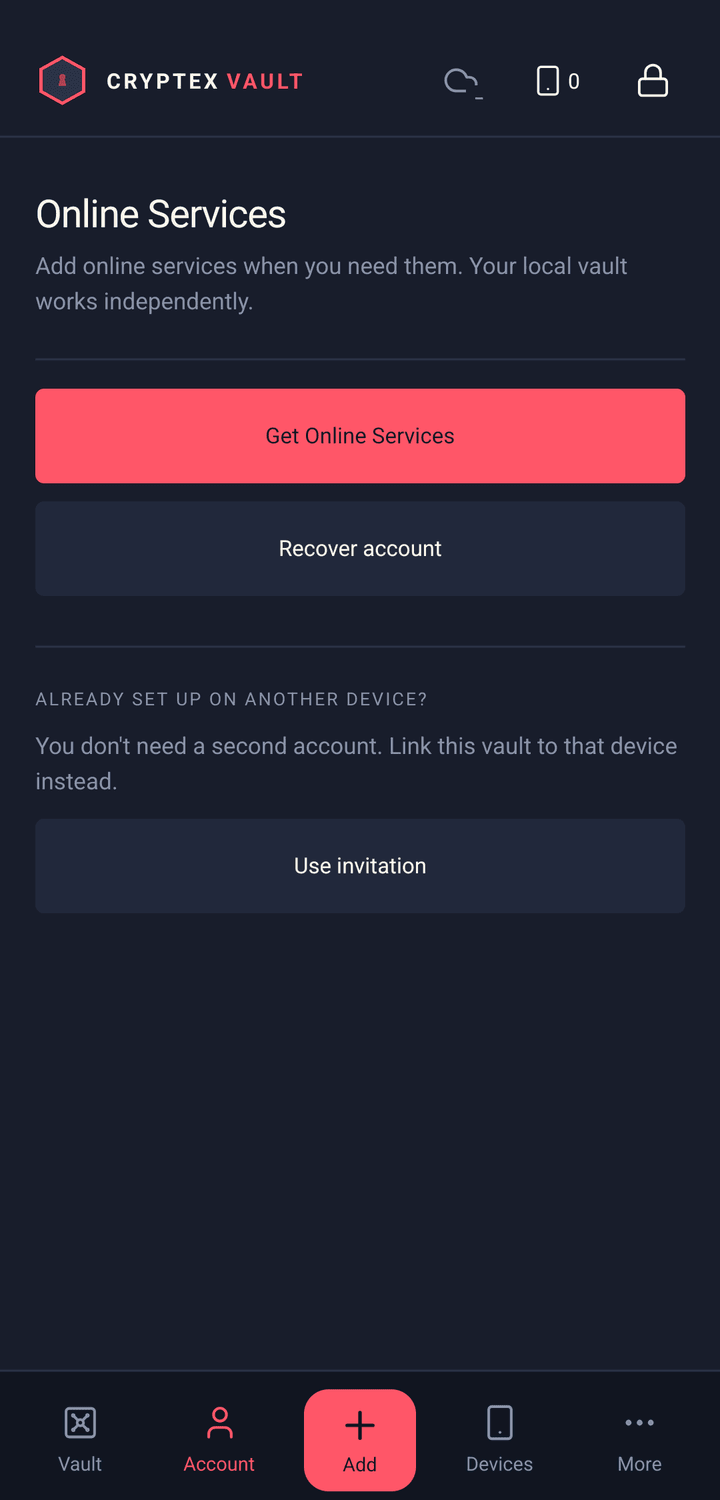
To avoid this, don't sign up on the second device. Its Account tab on Android, and the account dialog in the web app, point to Use invitation instead.
 View full size
 View full size
 View full size
- Keep it and link links the vault and leaves the old account as it is, with any subscription on it. You can still reach it with its Recovery Kit.
- Delete it and link deletes the old account first, then links. Deleting cancels a subscription bought on the web. Only the old account's root device shows this choice.
- Cancel stops linking and changes nothing.
Sync your changes
New links connect automatically and sync after connecting. Open and unlock both vaults so they can exchange changes. The web app can sync in a background tab. If you use the extension, keep its popup open while syncing.
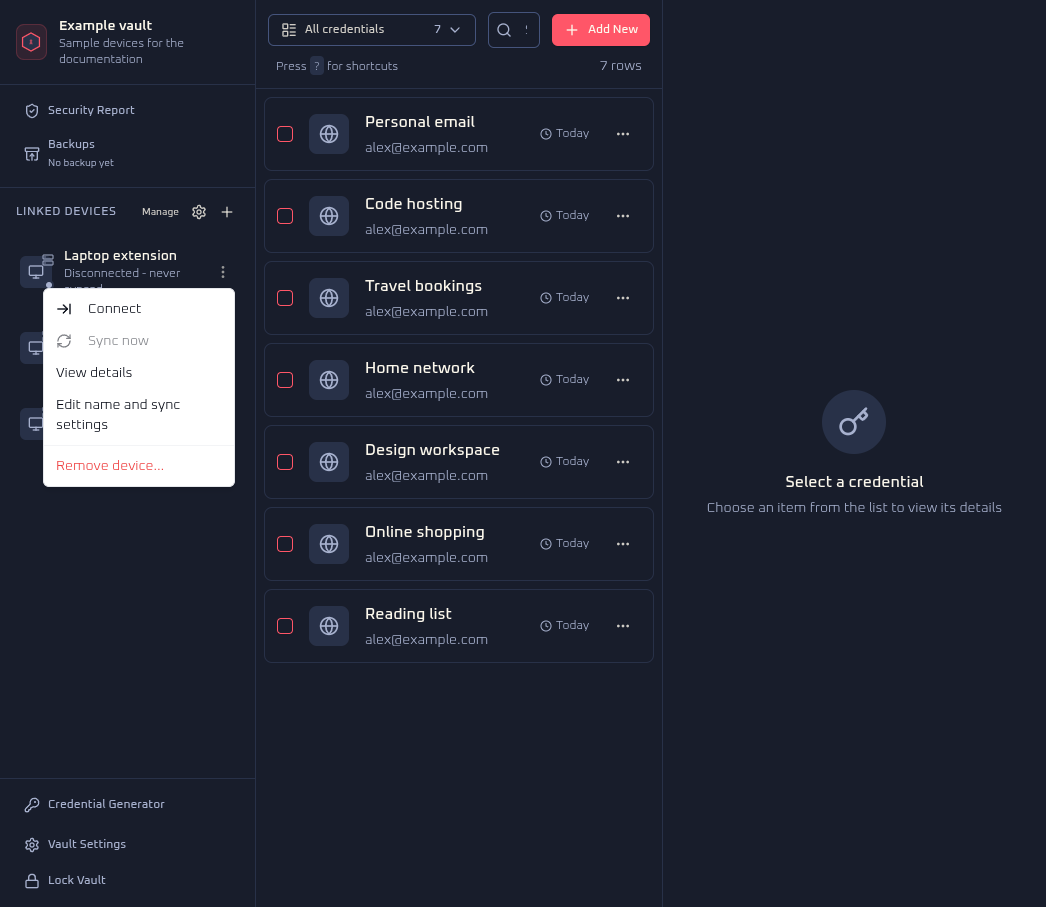
In the web vault, choose Manage beside Linked Devices and select the other device. Check that Last successful sync updates. If automatic connection is off, use Connect. Once connected, Sync now lets you start a sync manually.
 View full size
Open the device's three-dot menu in the Linked Devices sidebar, or press and hold its row on a touch screen. Choose Edit name and sync settings to change Connect automatically, Sync after connecting, or Disconnect after inactivity.
Manage devices and links
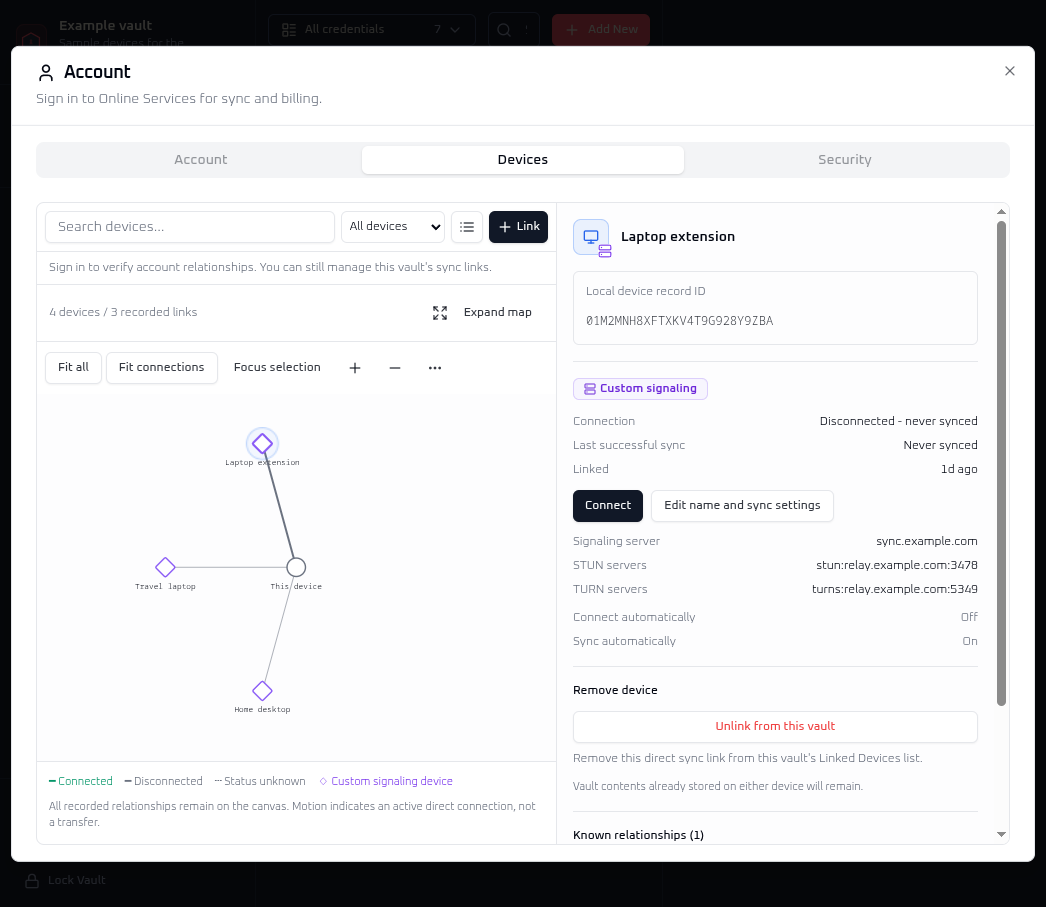
Choose Manage beside Linked Devices, or open the Devices tab in Account. Selecting a device in the sidebar, or choosing View details in its menu, opens the same screen with that device selected. On touch screens, hold a device row to open its quick actions; the three-dot button also opens the menu.
Switch between the connection map and device list. Select a device to inspect its saved links, connection status, and last successful sync. Select a line on the map to inspect a relationship. Custom signaling devices have a diamond marker. An animated line means a connection is active; it does not prove that a transfer is in progress or that a sync completed. Connections between other devices may show an unknown status.
Local links remain visible without an Online Services session or root access. Account-wide information and permissions require the appropriate account access. Use the refresh button when signed in to reload account information; it has a ten-second cooldown. A failed or unavailable account check does not establish that a saved relationship was deleted.
 View full size
If a relationship is confirmed missing from Online Services, or an unlink attempt fails, device details can offer removal of the saved link from this vault only. That cleanup does not revoke the remote account registration.
If you get stuck
The message Vault transfer could not be authenticated. Update the sending device and try again. means the receiver could not verify the sender. Update the sending app and retry with a new invitation. Current receivers reject transfers from older senders that do not sign the transfer. If it still fails with both apps updated, stop and seek help rather than bypassing the check.
If the connection does not complete, check that both devices are online and both vaults are still open. Check the verification words and your Online Services access or custom server settings, then try again.
For connection problems, see Troubleshooting. For an explanation of how changes move between linked devices, read the technical synchronization guide.